
Your first interview can feel scary because you do not know what to expect. The good news is that most fresher interviews ask a similar set of questions. If you prepare honest, clear answers to them, you will already be ahead of many candidates. This guide covers the common interview questions for freshers, what the interviewer really wants to know and how to answer.
A simple structure for any answer
Use this four-step shape for most answers:
- Point: answer the question in one sentence.
- Example: give one real example from college, a project or an internship.
- Result: say what happened or what you learned.
- Link: connect it to the job.
For behaviour questions (“tell me about a time when…”), the same idea is often called the STAR method: Situation, Task, Action, Result.
The questions you should prepare
1. “Tell me about yourself”
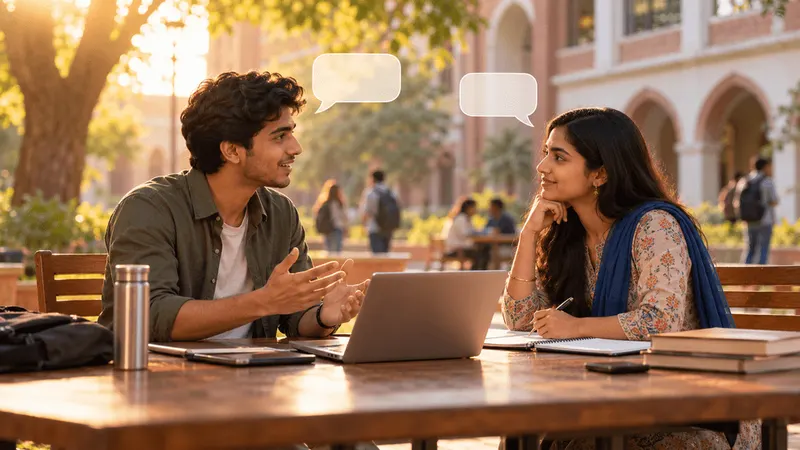
The interviewer wants a short introduction, not your life story. Cover your education, one or two strengths or projects, and why this role interests you. Keep it near one minute. Write it down, practise it aloud and avoid reading it.
2. “Why do you want this job?” or “Why our company?”
Read about the company before the interview: what it does, its products or services and its recent news. Then connect it with your skills. “I enjoy working with data, and your team works on sales analytics, so I would learn a lot while contributing” sounds far better than “I need a job”.
3. “What are your strengths?”
Pick two or three strengths that matter for the job and prove each with an example. Instead of saying “I am a hard worker”, say “I managed our department fest accounts and kept the records updated every day for two weeks.”
4. “What is your weakness?”
Choose a real, small weakness that you are working on, and show the steps you take. For example: “I used to feel nervous speaking in groups. I now present in class once a week to improve.” Avoid fake weaknesses such as “I work too hard”.
5. “Tell me about a project or achievement”
Explain the goal, your role, what you did and the result. Be clear about what you did yourself and what the team did. Numbers help when they are true, such as how many people, how many days or how many records.
6. “Tell me about a time you worked in a team or handled a problem”
Use the STAR method. Show that you listen, share work and stay calm. Never blame teammates.
7. “Where do you see yourself in five years?”
Interviewers look for ambition with realism. Talk about learning, taking more responsibility and growing within the field. You do not have to name an exact post.
8. “Are you willing to relocate or work in shifts?”
Answer honestly. If you have a limit, say it politely and clearly rather than agreeing and leaving later.
9. “Do you have any questions for us?”
Always ask one or two. Good examples: “What would a successful first three months look like?” or “What training do new joiners receive?” Do not ask about salary and leave in the first round unless the interviewer raises it.
Before the interview
- Read the job description and match your skills to it.
- Keep a clean, one-page resume. Our guide on how to write a fresher resume will help.
- Prepare original documents and copies in a folder.
- Plan the route and reach 15 minutes early, or test your link and camera for online interviews.
- Dress neatly and simply.
During the interview
- Greet politely, smile and sit straight.
- Listen to the full question before answering.
- Speak clearly at a steady speed, and pause if you need a moment to think.
- Keep eye contact, or look at the camera in online interviews.
- Never lie. If you do not know something, say so and explain how you would learn it.
After the interview

Send a short thank-you message within a day. It is polite and keeps your name in the interviewer’s mind.
Build the skills behind the answers
Good answers come from real skills: communication, teamwork and confidence. Read our guide on the soft skills employers value and consider freelancing as a student to get real examples to talk about. You can search jobs and use career resources on the government’s National Career Service portal, and learn communication skills for free on SWAYAM. To practise in a structured way, see our course Soft Skills & Employability — From Campus to Career on the for students page. More learning resources for students are available at our sister portal bhavyagyan.in.
To find fresher openings to apply for, browse Jobs Hub, our sister job portal for freshers and campus hiring.
Conclusion
Fresher interviews are less about perfect answers and more about clear, honest and well-prepared ones. Learn the common questions, use the point–example–result structure, research the company and practise aloud. With preparation, your nervousness turns into confidence.
For questions about our courses, contact us or see all courses. You can also read about Bhavya Gyan Academy or visit our FAQs.
Related reading: How to write a fresher resume · Soft skills for students: 10 skills employers value
Frequently asked questions
What is the most common question in a fresher interview?
"Tell me about yourself" is asked in almost every interview. Prepare a short answer of about one minute covering your education, your main skills or projects and why you want this role.
How do I answer if I have no work experience?
Use examples from college: projects, internships, group work, events, volunteering or self-learning. Interviewers want to see how you think and behave, not only where you have worked.
What should I do if I do not know the answer?
Be honest. Say you are not sure, explain how you would find out or what you do know that is related. A calm, honest answer is better than a made-up one.
How long should my answers be?
Most answers work well at 30 to 90 seconds. Give the main point first, support it with one example, and stop.
How can I reduce nervousness before an interview?
Practise your answers aloud with a friend, prepare your documents the day before, reach early and breathe slowly before you enter. Preparation is the best cure for nervousness.
Further reading and official resources
- National Career Service (NCS) portal — a government portal for job seekers, with job listings and career resources
- SWAYAM — free online courses — the national platform for free online courses, including communication skills
- Bhavya Gyan — our sister portal — our sister portal for students and colleges
- Jobs Hub — our sister job portal — free job listings for freshers and campus hiring, in English and Hindi